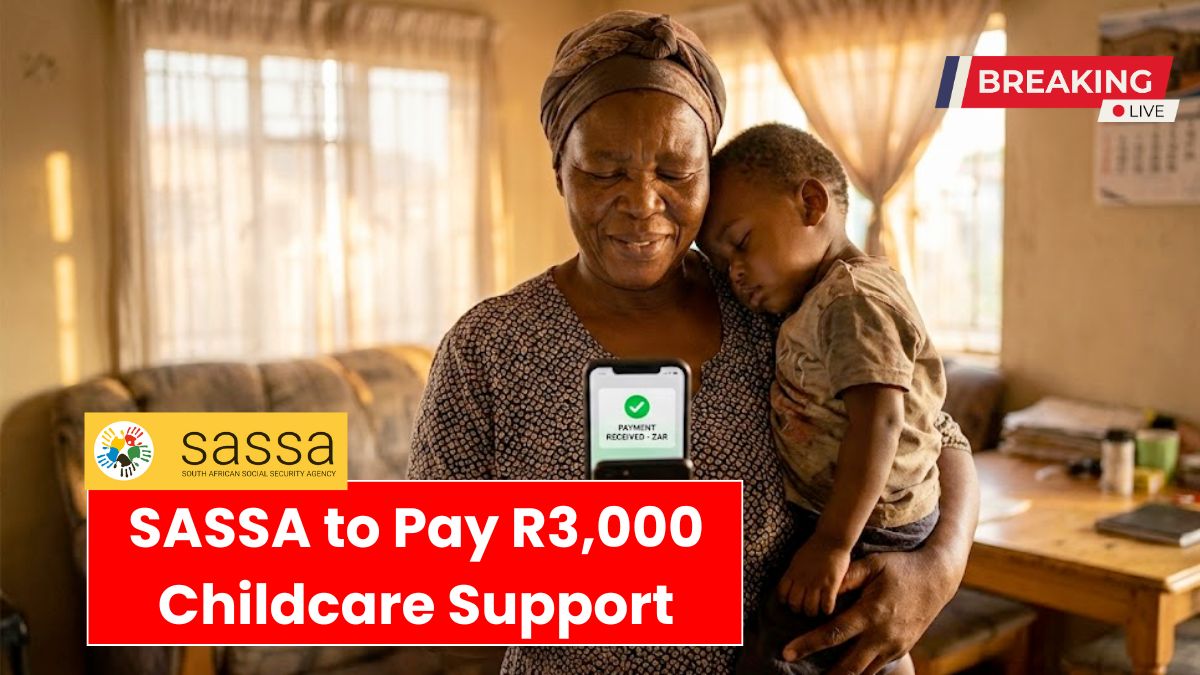
SASSA R3,000 Childcare Support – With living costs rising across South Africa, many families raising children are feeling the pressure more than ever. Food, transport, clothing, school fees and other essentials continue to get more expensive every year. That is why SASSA’s highlighted R3,000 childcare support has sparked so much interest. Caregivers want to know whether they qualify, how the payment will work, and whether their names appear on the beneficiary list. This simplified guide breaks down everything families need to know so that no one misses out due to confusion or lack of information.
What the R3,000 Childcare Support is Designed to Do
The R3,000 childcare support programme aims to provide short-term financial relief to low and moderate income households responsible for raising children. The payment is intended to help caregivers manage childcare-related expenses such as groceries, school necessities, transport, clothing, toiletries and other day-to-day needs. While R3,000 cannot cover everything a family needs, it can make a meaningful difference to monthly budgeting — especially during the festive season when expenses tend to increase. The support also strengthens community wellbeing by ensuring children receive the care and essentials they need.
Quick Summary of the SASSA R3,000 Childcare Support
The childcare support programme rolls out from 15 December 2025 and offers R3,000 per approved household. The support will be paid through direct bank deposit or SASSA-approved payout points, depending on the option selected by beneficiaries. Only eligible caregivers will qualify, and correct documents are required to apply or verify information. The South African Social Security Agency (SASSA) is overseeing the programme and will release all official announcements through its website.

Eligibility Criteria for R3,000 Childcare Support
To determine whether you may qualify, SASSA will consider several factors based on fairness and financial need. The support is mainly meant for parents, legal guardians or primary caregivers of children who live in the household and depend on the caregiver financially. Proof of caregiving responsibility is crucial to determine whether the child relies on you day-to-day. Income level also plays a key role. The programme is aimed at low and limited income households, so means testing or proof of unemployment may be required. Priority may be given to households caring for orphaned children, children with disabilities or children in high-risk circumstances, provided information and documents match SASSA’s records.
Required Documents for Application or Verification
The best way to avoid delays or rejection is to prepare all required documents before you visit a SASSA office or submit an application. These typically include a valid South African ID or Smart ID card, the child’s unabridged birth certificate or proof of legal guardianship, proof of income or unemployment for adults living in the household, and proof of residential address. If payment is to be made through direct deposit, a bank statement or bank confirmation letter is needed. Keeping both paper and digital copies of all documents makes the process smoother if SASSA asks for clarification.
How and When Payments Will Be Made
Once an application is approved, payments will be made through SASSA’s standard channels. The highlighted start date for the R3,000 childcare support is 15 December 2025, and beneficiaries should monitor official updates around that period for the exact payment schedule. Payments will be processed either by direct deposit into the beneficiary’s bank account or collection at approved payout points or retail partners, depending on the selected method. To avoid delays, ensure your bank details are active and correctly registered with SASSA. Incorrect banking information is one of the most common causes of late or failed payments.

How to Check If Your Name is on the Beneficiary List
Many caregivers are eager to know whether they are included on the list of approved beneficiaries. The most reliable method is to follow SASSA’s official channels. Beneficiaries can visit the SASSA website to check for announcements or dedicated pages about the R3,000 support. If SASSA launches an online status-check portal, enter your ID number only through the official website and not through forwarded links or social media screenshots. Beneficiaries can also contact the SASSA call centre or visit a local SASSA office for confirmation. Always carry identification and supporting documents during in-person visits.
Tips to Avoid Delays or Payment Problems
To increase the chances of receiving payment without issues, double check that all forms are accurately filled in and signed. Ensure that names and ID numbers match perfectly across all documents, including birth certificates and affidavits. Keep your contact details and address updated with SASSA so that you can be reached if more information is required. Respond quickly to any follow-up requests from SASSA and keep copies of all reference numbers for future checking. If payments take longer than expected, follow up calmly through official channels instead of third-party agents.
Final Thoughts
The SASSA R3,000 childcare support provides much-needed financial relief to families caring for children during a time when living costs continue to rise. By understanding who qualifies, preparing the right documents and keeping information updated, caregivers can improve their chances of receiving the support smoothly and on time. Following only official updates helps protect families from misinformation and scams. With proper preparation and regular follow-ups, the support can make a meaningful difference to the wellbeing of children and households across the country.

Disclaimer
This article is designed for general informational purposes only and should not be treated as official financial, legal or government advice. Payment schedules, eligibility rules and the availability of the R3,000 childcare support may change based on formal updates from the South African Social Security Agency (SASSA). Readers are advised to verify details directly through official SASSA platforms before taking action based on this content. The publisher does not accept responsibility for decisions made solely from this article.